
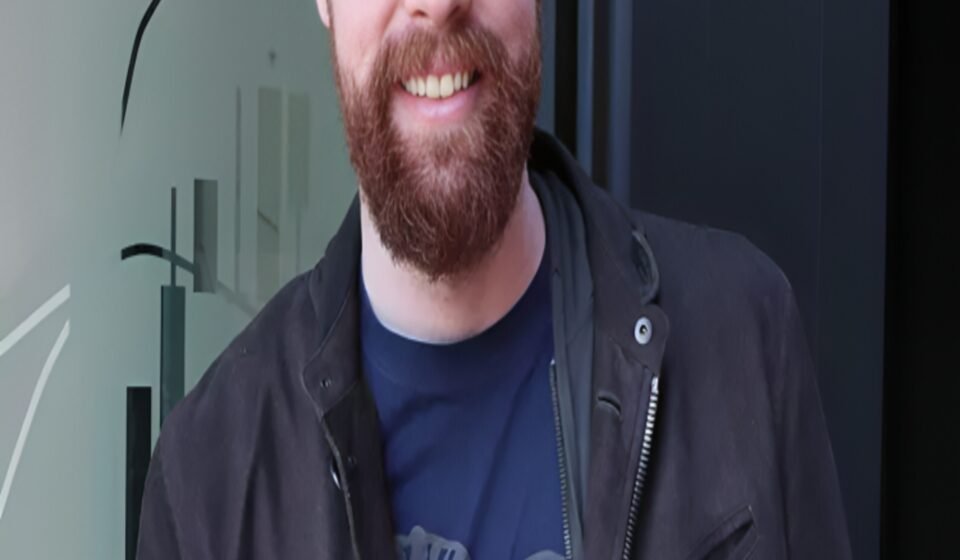

There are some people in Australian public life who seem to attract attention effortlessly — not always for the right reasons, but always for reasons that make you sit up and take notice. Ross Cameron is one of those people.
From growing up in a political household in Sydney’s northern suburbs, to winning a federal seat at just 29 years old, to co-hosting one of Sky News Australia’s most-watched — and most controversial — programs, Cameron has lived a public life that reads like a cautionary tale and a comeback story all at once. He has been celebrated as a sharp political mind, condemned as a divisive voice, and has reinvented himself more than once when the ground shifted beneath him.
This article takes an honest, thorough look at the man behind the headlines — who he is, where he came from, what he stood for in parliament, how his media career unfolded, and what he’s been up to since. Whether you’ve followed his career for decades or are just hearing his name for the first time, there’s a lot more to Ross Cameron than any single moment can capture.
Early Life: Growing Up with Politics at the Dinner Table
Ross Alexander Cameron was born on 14 May 1965 in Sydney, New South Wales. If politics was ever going to be in someone’s blood, it was in his.
His father, Jim Cameron, was a Liberal member of the New South Wales Legislative Assembly, representing the seat of Northcott from 1968 to 1984. Jim Cameron even served as Speaker of the NSW Legislative Assembly from 1973 to 1976 — a prestigious role that puts you at the centre of parliamentary procedure. Growing up in Turramurra, a leafy suburb on Sydney’s Upper North Shore, Ross was raised in a household where political discussion wasn’t just dinner table conversation — it was the family trade.
He completed his secondary education at Knox Grammar School, one of Sydney’s well-regarded independent schools, before heading to the University of Sydney. There, he earned a dual degree — a Bachelor of Economics and a Bachelor of Laws (B.Ec and LLB) — giving him a grounding in both the analytical world of economics and the argumentative world of legal reasoning. It was a combination that would serve him well across three very different careers.
Before entering politics himself, Cameron worked as a solicitor at Blake Dawson Waldron, a prominent law firm. He wasn’t just a passive observer of public affairs, though. He took on a role as policy adviser and research officer to Bruce Baird, the NSW Minister for Transport — getting a hands-on look at how government actually worked, not just how it was supposed to work.
He also spent time in the United States as an intern to Senator Mark Hatfield, a Republican senator from Oregon known for his moderate views and his principled opposition to the Vietnam War. It was an unusual formative experience that gave the young Cameron a window into international conservative politics at its most thoughtful.
Into Parliament: Winning Parramatta in 1996
The 1996 federal election was a transformative moment for Australian politics. John Howard led the Liberal Party to a landslide victory over Paul Keating’s Labor government, sweeping in a new wave of Liberal MPs. Ross Cameron was one of them.
At just 29 years old, Cameron won the Division of Parramatta — a traditionally Labor-held seat in western Sydney — defeating the incumbent Labor member Paul Elliott. It was a genuine achievement. Parramatta was not safe Liberal territory; it required real campaigning, real persuasion, and the ability to connect with a diverse, working-class electorate. Cameron managed all of that. One notable moment from his early parliamentary career: when he delivered his first speech to the House, he did so entirely without notes. It was the kind of self-assured debut that marks someone out as someone to watch.
He held Parramatta for three terms — a remarkable feat for a Liberal member in what was always considered Labor heartland. Over those years, he took on a range of roles that gave him increasing influence within the Howard government.
From 2001 to 2003, Cameron served as Parliamentary Secretary to the Minister for Family and Community Services. Then, from 2003 to 2004, he was elevated to Parliamentary Secretary to the Treasurer — working alongside Peter Costello, one of the most capable and long-serving treasurers in Australian history. These were not ceremonial titles. Parliamentary secretaries carry real workloads, assist ministers with policy development, and act as a bridge between the executive and the backbench. Cameron was clearly seen as someone with the capability to handle that responsibility.
He was also known for some more personal quirks during his parliamentary years. He ran regular prayer meetings in his office in Parliament House for fellow politicians — reflecting his deep Christian faith and his association with The Fellowship, an American evangelical Christian organisation with ties to political figures around the world. He also waged an eight-year campaign — yes, eight years — against the Parliament House contemporary art collection, which he considered a misuse of public funds. Whether you agreed with him or not, you could never accuse the man of losing interest once he locked onto something.
Losing Parramatta: The 2004 Election Defeat
Every political career has its reversal, and Cameron’s came in the October 2004 federal election. Despite John Howard winning a fourth consecutive term and the Liberals holding government comfortably, Cameron lost his seat of Parramatta to Labor candidate Julie Owens.
It was a stinging personal defeat. Cameron had held the seat through three elections and had built a genuine profile both locally and nationally. Owens, however, ran an effective campaign and Parramatta’s demographics were shifting in ways that made it increasingly difficult for Liberal candidates to hold. Cameron was out of parliament at 39.
What he did next is interesting. Rather than immediately seeking a return to politics, he moved into the private sector. He joined Macquarie Group — one of Australia’s most high-profile investment banks — where he worked from January 2005 to August 2008, focusing on government procurement and finance for infrastructure projects. It was a logical use of his combined economics and law background, and it connected his political contacts with commercial opportunity.
But it wasn’t a permanent farewell to public life. Cameron never quite stopped engaging with politics, whether through writing or commentary. He wrote more than 70 opinion pieces for publications including the Sydney Morning Herald, ABC’s The Drum, and The Australian newspaper. He was a regular panellist on Channel 7’s Sunrise program, where he and former Labor leader Kevin Rudd — both backbenchers at one point — would argue opposite sides of the political divide. It was the kind of format that Cameron was genuinely good at: quick, articulate, opinionated but not inarticulate.
The Sky News Years: From Commentator to Controversy
In 2013, Cameron joined Sky News Live as a contributor, and over the following years he became one of the network’s more recognisable conservative voices. The platform suited him. Sky News, particularly its evening and weekend programming, had carved out a space for unfiltered right-of-centre commentary, and Cameron fit that mould.
His career at Sky reached its peak — and its end — through his role as co-host of Outsiders, a program he shared with right-wing columnist Rowan Dean. Outsiders was explicitly positioned as a counterpoint to the ABC’s Insiders program, offering a conservative take on the week’s political events. It was popular with a certain audience, controversial with many others, and never exactly quiet.
The show moved from a weekly Sunday timeslot to a five-day-a-week format, which gave it significantly more reach. Cameron and Dean became something of a double act, reinforcing each other’s positions and offering a consistently conservative critique of the political mainstream. Critics argued the show regularly crossed from commentary into provocation. Supporters saw it as one of the few places on Australian television where conservative voices could speak without being managed or muted.
But the program attracted serious criticism well before Cameron’s departure. In July 2018, a producer was suspended after the show broadcast and displayed on screen offensive comments made by Liberal Democratic Senator David Leyonhjelm about Greens Senator Sarah Hanson-Young. Sky News issued a formal apology. In May of that year, the network also faced backlash for allowing far-right activist Blair Cottrell — convicted in 2017 of inciting contempt and ridicule of Muslims — to appear on the program to discuss immigration.
The controversies were accumulating. And then came the moment that ended Cameron’s Sky News career entirely.
The Incident That Changed Everything: November 2018
On 30 October 2018, during a broadcast of Outsiders, Ross Cameron made racist remarks about Chinese people. While discussing Australia’s relationship with China and concerns about Chinese government influence in Australian society, he described Chinese visitors to Shanghai Disneyland using deeply offensive racial stereotypes — describing them with slurs referencing their physical appearance.
The clip was picked up by Sleeping Giants Oz, an activist group that campaigns against problematic media by pressuring advertisers. The clip spread rapidly on social media. Former Race Discrimination Commissioner Tim Soutphommasane publicly condemned the remarks. Advertisers including Qantas came under pressure to withdraw sponsorship from Sky News. The backlash was swift, broad, and damaging.
Sky News CEO Paul Whitaker responded within days. On 2 November 2018, he announced that Cameron’s contract had been terminated, effective immediately. “Sky News is committed to robust discussion and debate,” Whitaker said in a statement. “However, this language is totally unacceptable and has no place on any of our platforms, nor in modern Australian society.” Sky also removed all content from the October 30 episode from its platforms.
Cameron subsequently said he was “happy to apologise to anyone who has taken offence” and acknowledged the comments “could have been done better.” He described it as “a failure on my part.” But for many people, the apology came too late, and the damage — to Cameron’s career and to Sky News’s reputation — had already been done.
It is worth noting that this was not Cameron’s only controversial moment at Sky. In February 2017, he had made derogatory remarks about gay people during a broadcast — comments that were condemned by Sky News colleagues including journalists David Speers, Peter van Onselen, and Kristina Keneally. That same month, he was suspended by the Liberal Party’s NSW state executive for four and a half years, after he gave an interview to ABC’s 7.30 Report in which he called Liberal Party processes “corrupt” and described the party in deeply offensive terms. The suspension effectively ended his formal relationship with the Liberal Party.
What the Controversy Revealed
It is tempting to reduce Ross Cameron’s story to a single moment of failure, but that would miss a more complicated picture.
Cameron was never a quiet, establishment Liberal. He was always more willing than most to say things that others thought but didn’t say aloud — and that tendency, which made him compelling television, was also the tendency that repeatedly landed him in trouble. The distance between “provocative commentator” and “someone who says something genuinely harmful” can be shorter than it looks when you’re working in a format that rewards edginess.
The 2018 incident revealed something real about the culture of certain parts of Australian media — the willingness to platform commentary that pushed at the edges of what was acceptable, often in the name of “free speech” or “robust debate.” Cameron was both a product of that culture and one of its casualties.
It also raised genuine questions about accountability in media, the role of advertisers in shaping what gets aired, and the difference between conservative commentary and outright prejudice. Those debates didn’t end with Cameron’s sacking — they’ve continued, in Australia and elsewhere, to the present day.
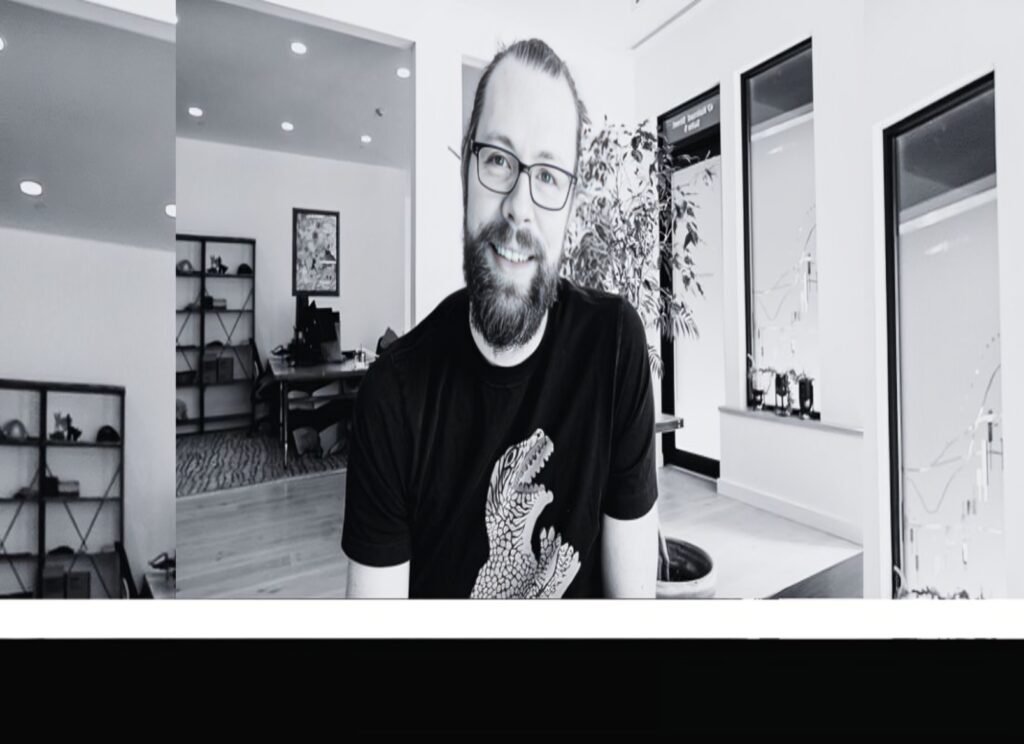
Life After Sky News: The Libertarian Turn
After his departure from Sky News, Cameron stepped back from the media spotlight. But he didn’t step away from public life entirely.
In 2021, he made a significant ideological move: he left the Liberal Party and joined the Libertarian Party of Australia. For a man who had spent his entire adult life within the Liberal fold — first as a staffer, then as an MP, then as a conservative commentator — this was a meaningful shift. The Libertarian Party, with its emphasis on individual freedom, small government, and opposition to state intervention, represented a more ideologically pure form of the free-market conservatism that Cameron had always leaned towards.
Then, in January 2023, he was elected President of the New South Wales Libertarian Party, taking over from Dean McCrae. It was a return to organisational political work, even if far from the corridors of federal parliament. In that role, he has spoken at branch meetings, shared his insider perspective on how government bureaucracy operates, and worked to build the party’s presence in NSW.
He remains a figure of some public interest — particularly to those on the conservative and libertarian side of Australian politics who see his career as a story about what happens when someone says what they actually think in a media environment that simultaneously rewards and punishes exactly that.
Ross Cameron’s Political Legacy: A Fair Assessment
What is Ross Cameron’s actual political legacy? It’s a fair question, and the answer is more nuanced than either his supporters or his critics might like.
On the positive side: he held a genuinely marginal seat for three terms, serving his constituents in Parramatta through a significant period of economic reform and national change under the Howard government. He served as Parliamentary Secretary to the Treasurer at a time when Australia was navigating complex economic terrain. His writing — 70-plus opinion pieces across major publications — contributed to the range of voices in Australian political debate. And his willingness to criticise his own party, even at personal cost, showed a degree of political courage that is actually quite rare.
On the negative side: his media career ended in a way that caused real harm — to the people his words targeted, to the credibility of conservative commentary as a whole, and to his own reputation. The 2017 and 2018 controversies were not isolated slip-ups; they reflected a pattern of reaching for provocation that eventually went too far.
What’s interesting about his move to the Libertarian Party is what it might say about his intellectual evolution. The Libertarian Party is not the Liberal Party with a different badge. It represents a genuinely different political philosophy — one that is skeptical of state power in ways that cut across traditional left-right lines. Whether Cameron’s shift reflects a genuine rethinking of his political commitments or simply a search for a new platform is something only time will tell.
The Bigger Picture: Conservative Media and Political Voices in Australia
Ross Cameron’s story doesn’t exist in isolation. It’s part of a broader narrative about the role of conservative media figures in Australian political life — a narrative that has intensified since the mid-2010s with the rise of platforms like Sky News After Dark, the proliferation of political podcasts, and the growing influence of social media on what gets attention and what gets cancelled.
Australia’s media landscape has long had a strong conservative presence, particularly through News Corp publications. Sky News extended that presence into television, particularly in its evening programming. Figures like Cameron, Rowan Dean, Andrew Bolt, and others built audiences among viewers who felt that mainstream media — particularly the ABC — leaned left and didn’t represent their views.
The question of where the line sits between provocative commentary and genuinely harmful speech is one that Australian media is still working through. Cameron’s dismissal from Sky News was one of the clearest examples of that line being crossed and of consequences following. But the debate itself — about what can be said, by whom, on what platform, and with what accountability — remains very much alive.
ASLO VIEW :Justin Chien
FAQs
1. Who is Ross Cameron and why is he significant in Australian politics?
Ross Cameron is a former Australian Liberal MP who represented the Division of Parramatta in western Sydney for three terms between 1996 and 2004, during John Howard’s government. He was known for winning and holding a traditionally Labor seat, for his role as Parliamentary Secretary to the Treasurer, and later for becoming a prominent conservative media commentator on Sky News Australia. His significance lies both in his parliamentary career and in the debates his media work sparked about conservative commentary, free speech, and accountability in broadcasting.
2. Why was Ross Cameron fired from Sky News?
Cameron was sacked from Sky News on 2 November 2018, following racist remarks he made on air during an episode of Outsiders on 30 October 2018. He made deeply offensive comments about Chinese people using racial stereotypes. The clip went viral after being shared by the activist group Sleeping Giants Oz, leading to advertiser pressure on Sky News. Sky’s CEO described the language as “totally unacceptable” and terminated Cameron’s contract effective immediately. Cameron later offered an apology, acknowledging the remarks were a “failure on my part.”
3. What did Ross Cameron do after leaving Sky News?
After his departure from Sky News in 2018, Cameron maintained a lower public profile. In 2021, he left the Liberal Party and joined the Libertarian Party of Australia, reflecting a shift towards a more explicitly free-market, small-government political philosophy. In January 2023, he was elected President of the New South Wales Libertarian Party. He has since spoken at party events and meetings, sharing his perspective on government and bureaucracy with members.
4. What was the Outsiders program and what was Cameron’s role on it?
Outsiders was a Sky News Australia program co-hosted by Ross Cameron and right-wing columnist Rowan Dean. It was positioned as a conservative alternative to the ABC’s Insiders, offering political commentary from the right of the spectrum. Originally airing once a week on Sundays, it expanded to a five-day-a-week format during Cameron’s tenure. The show was popular with conservative audiences but drew repeated criticism for broadcasting controversial content, including comments that led to advertiser boycott campaigns. Cameron’s employment was terminated following the November 2018 controversy.
5. What is Ross Cameron’s connection to the Libertarian Party today?
Since January 2023, Ross Cameron has served as the President of the New South Wales Libertarian Party. He joined the party in 2021 after leaving the Liberal Party, where he had been a member throughout his political career. In his current role, he speaks at branch meetings, engages with party members, and advocates for libertarian policy positions. He has spoken publicly about his experiences in federal parliament — particularly about how bureaucracy can dominate ministerial decision-making — and remains a figure of interest to those on the conservative and libertarian side of Australian politics.